A while back, I made a map widget for my Nokia 3210 and decided to share it on the Cloud Phone platform, where thousands of users rely on it daily! Last year, I tracked its usage in January and shared what I found. I thought it would be interesting to repeat this exercise a year later and here is what I have discovered.
A Peek into January 2026 Cloud Phone Usage
Disclaimer: Unlike on the Apple Store or Google Play Store, the widget developers do not know where their widget can be accessed from. That is because each device manufacturer decides which widgets to show on each device in each region. So, this data does not represent the total Cloud Phone or feature phone usage. Some manufacturers might not have included my widget on some devices in some regions.
Usage by Country
India, like last year, leads the usage with 87% (up from 85.3%). South Africa and Bangladesh remain in the top usage countries but South Africa’s usage share dropped to 5.9% (down from 10.5%). Eswatini and Madagascar also made the top five:
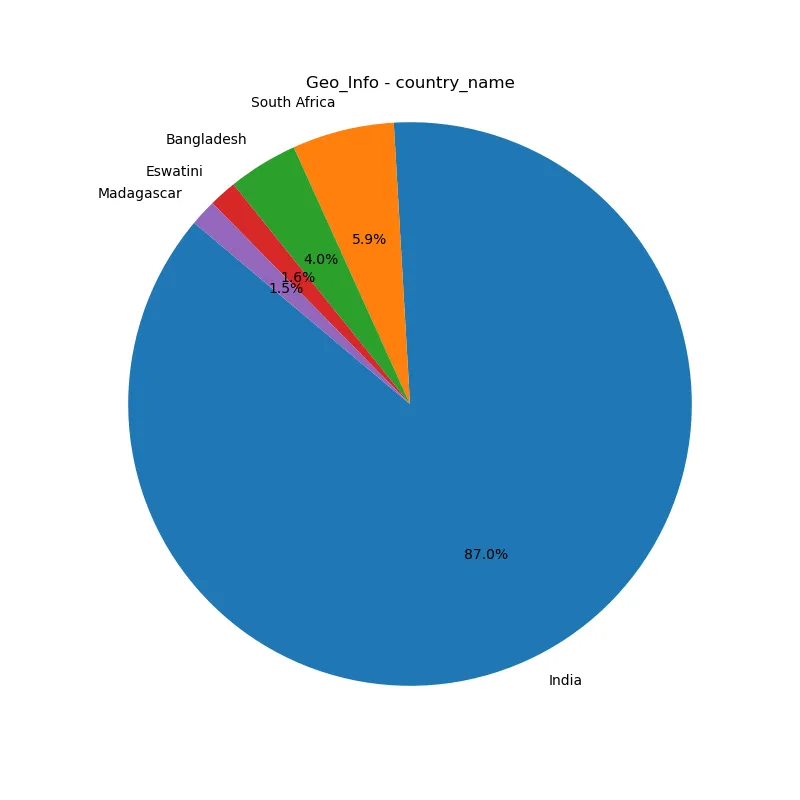
The rest came from many other countries: Zambia, Pakistan, Lesotho, Mozambique, Angola, Peru, the United States, Malawi, Singapore, Afghanistan, Hong Kong, Venezuela, Uruguay, Uganda, El Salvador, Taiwan, Chile, Zimbabwe, Sri Lanka, France, Germany, Japan, Tanzania, Chad, Vietnam, Ethiopia, Mexico, Congo, Qatar, Ukraine, the United Kingdom, Cameroon, Nicaragua, Greece, the United Arab Emirates, Canada, Nepal, Sweden, Botswana, the Central African Republic, Rwanda, the Philippines, Nigeria, Finland, Uzbekistan, Kenya, Argentina, New Zealand, Namibia, Thailand, the Netherlands, Belgium, Italy, Morocco, Suriname, Australia, Kyrgyzstan, Ghana, and Puerto Rico.
I suppose the widespread availability of feature phone models such as the Mobicel S4 and YAS WI-KIF 25 in Eswatini and Madagascar contributed to this shift in usage.
Usage by Phone Model
Here are the main phone models that used the map widget:
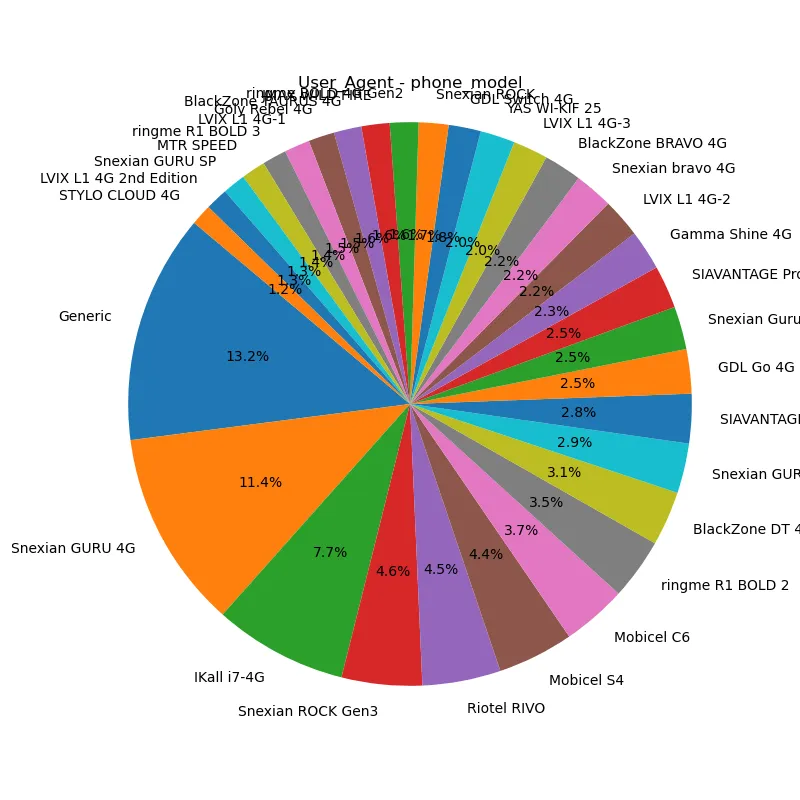
As before, „Generic“ is the default for devices without a specific model name in their user agent string. This could also be the Cloud Phone Simulator. However, this data might not be accurate even for known models since some manufacturers don’t set them correctly. For example, my Nokia 3210 sends its user agent as „Nokia 225 4G“.
The top phone models are all local brands. Last year’s top model was the Snexian GURU 4G but its usage share dropped from 46.4% to 11.4%. The remaining usage is fairly evenly split among many other phone brands and models.
In terms of chipsets, the ASR chipset’s share rose from 60% to 78.2% while the UNISOC chipset came in second with 21.8%. This could be a change on the CloudPhone side that chipsets are now always identified.
Usage by Cloud Phone Version
Cloud Phone versions vary in their implemented web browser APIs. Here is how many different Cloud Phone versions used the map widget:
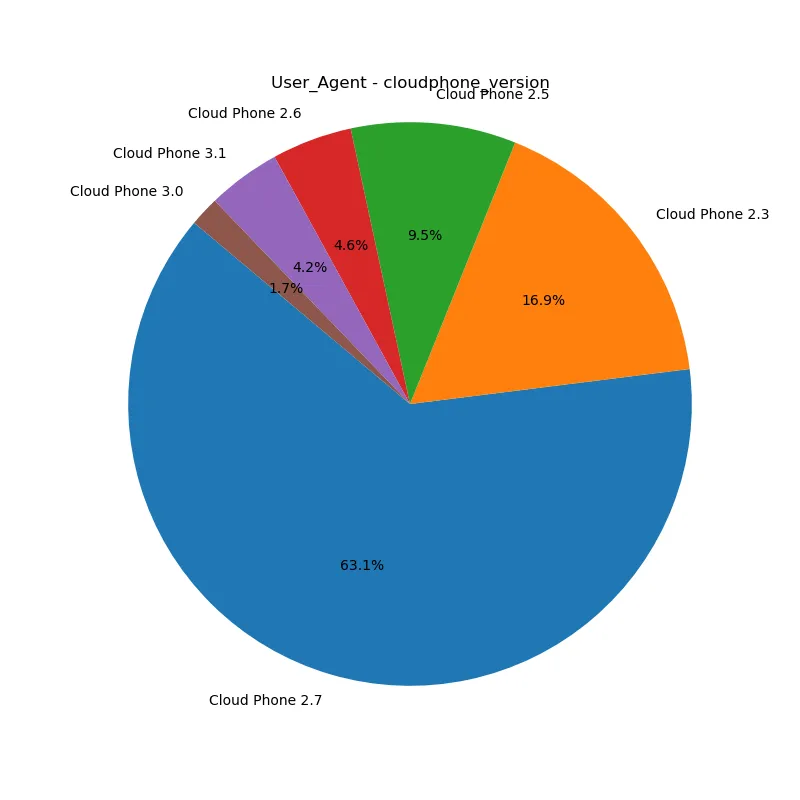
Cloud Phone 2.7 leads with 63.1% usage, a positive development as it supports file uploads, which are beneficial for many web apps. Cloud Phone 2.3, the top version last year, now has a usage share of 16.9%, a decrease from 55.4%. While some manufacturers may have updated their firmware, this shift is likely due to the introduction of newer phone models pre-installed with newer Cloud Phone versions. Sadly, my Nokia 3210 still runs on Cloud Phone 2.4.
Conclusion
While last year’s core message about considering small screen sizes and the majority of Cloud Phone app users being in India remains, a key change is the increased adoption of newer Cloud Phone versions. This allows app developers to utilise more web browser APIs.